
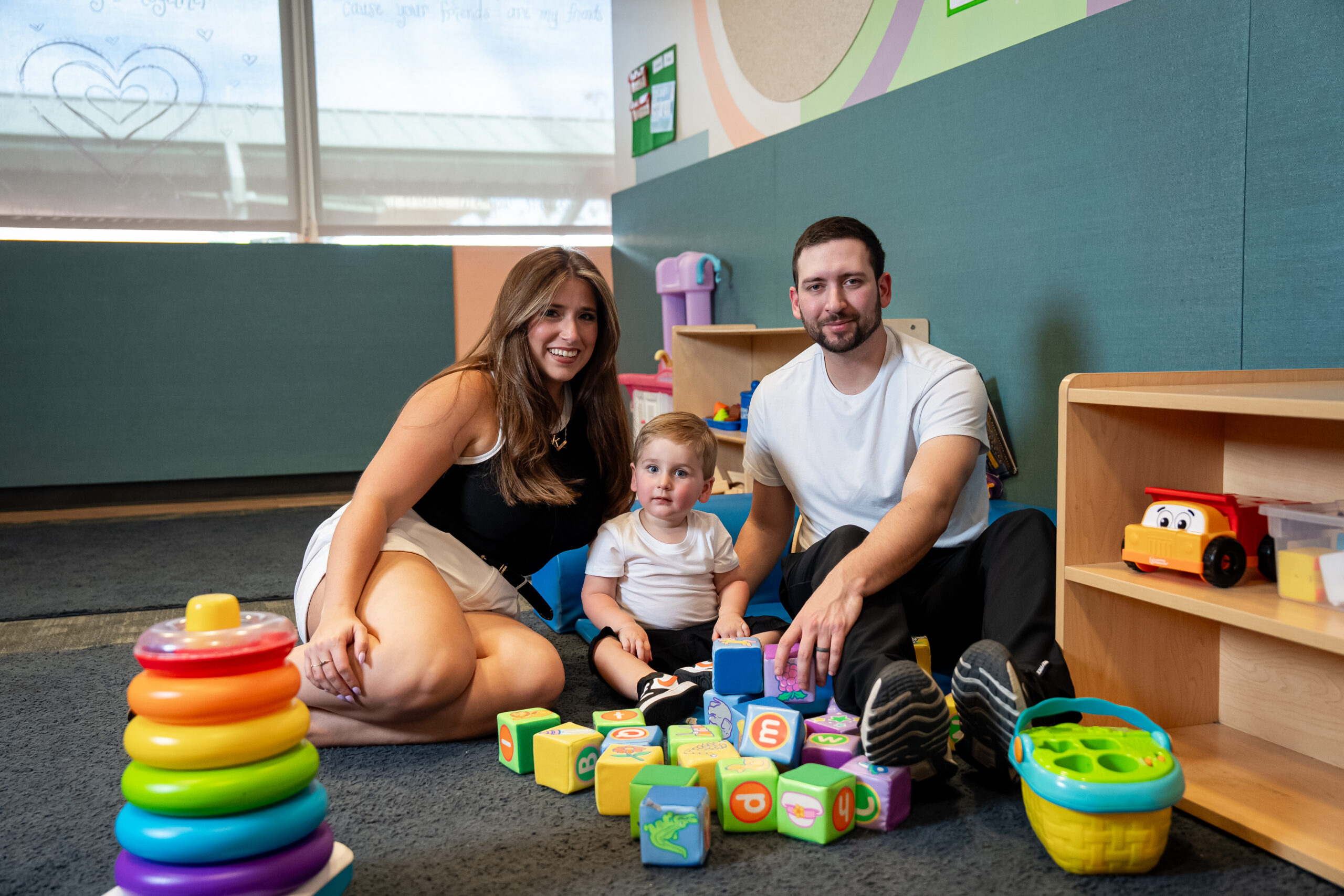
There is a familiar cadence to the first year of life – a sequence of smiles, babbles and shared glances that form the foundation of a child’s world. But for Kaitlyn and Brandon Marsonek, the early days with her son Henry felt subtly out of sync.
“When Henry was six to eight weeks old, he wouldn’t look at anyone,” Kaitlyn recalls. “He avoided all eye contact.”
While a pediatrician initially suggested a “wait and see” approach, Henry’s fascination with lights and shadows, as well as a lack of social engagement, persisted. By six months, the pediatrician acknowledged the early signs and referred the family to SARRC.
The Shift From Uncertainty to Action

The Marsoneks connected with SARRC immediately and began the Milestones program, which provides careful monitoring for infants as young as six months and supports parents at the earliest signs of concern. When Henry was around nine months old, they began receiving coaching sessions.
“Milestones fills an important gap,” says Rachel Anderson, then chief clinical officer with SARRC. “It gives families something proactive to do during what can otherwise feel like a long and uncertain waiting period. Henry’s story is a clear example of why early intervention matters – his family didn’t wait for a diagnosis; they acted on early signs.”
Through this coaching model, clinicians worked directly with Kaitlyn and Brandon, equipping them with strategies to support Henry’s development, from engaging in play and using toys purposefully to encouraging early communication skills like eye contact and social referencing.
“We learned what his mannerisms meant and how to support him through them,” Kaitlyn says. “We liked playing with Henry, but we didn’t realize the clinical meaning behind the activities. For example, learning that peek-a-boo is a foundational game that helps babies understand you still exist even when you’re hidden behind your hands or a blanket.”
This idea, often referred to as object permanence, helped them see that many early childhood activities, while simple on the surface, are deeply important building blocks for development. With that understanding, everyday interactions became more purposeful, and supporting Henry started to feel more intuitive and empowering.
A Season of Firsts
The impact of the coaching was almost immediate. Because the program focuses on empowering parents to lead the way, Henry’s major developmental milestones began happening shortly after beginning the program – some during the coaching sessions at SARRC and many right at home.
“Henry crawled on his belly for the first time during Milestones!” Kaitlyn says. “The progress from day one to now is incredible. We make such good eye contact now, especially with people we are familiar with. We play with toys in traditional ways, whereas before he only inspected them.”
Over time, Henry began referencing his parents and imitating actions, eventually leading to his first big words. For Kaitlyn, the most meaningful change wasn’t just Henry’s progress, but her own. She moved from feeling disconnected and unsure to feeling confident and deeply connected to her son.
“I truly believe it is the reason Henry has made the progress he has,” she says. “Once early intervention was explained to us, it seemed that all the pieces clicked. It made sense how working on different things earlier could be so impactful in his short-term and long-term development.”
Looking Toward the Future
Henry officially received an autism diagnosis in January 2026, just ahead of his second birthday. However, because of their proactive start, the diagnosis didn’t feel like a crisis, it was simply the next step in a journey already well underway.
“Early intervention doesn’t change who a child is – it expands what’s possible for them,” Anderson explains. “By focusing on foundational skills early, we can influence a child’s developmental path toward stronger communication and more meaningful relationships.”
Now two years old, Henry is a “happy, playful and super affectionate” toddler who loves swinging at the park and singing The Wheels on the Bus. He is finding his voice more every day, recently learning to sing his ABCs.
Building on this progress, Henry is now enrolled in SARRC’s Community School program, where he learns alongside peers both with and without autism in a supportive, inclusive environment. Guided by a dedicated team of clinicians and teachers, he is building social, emotional and early academic skills through play and connection.
At the same time, the Milestones program continues to evolve as well. SARRC is focused on using tools even earlier, being more precise and expanding access for families.
“We’re continuing to refine how we identify early markers, strengthen our caregiver coaching models, and integrate tools like video and remote support,” Anderson says. “We also want to make sure families and pediatricians know what to look for sooner, so they can act earlier. At the end of the day, our goal is simple – we don’t want families sitting in uncertainty. We want them to have support, guidance and something meaningful they can do right away, because we know how much can change in that first year.”
Kaitlyn and Brandon, alongside their incredibly supportive family, now advocate for other parents to listen to their inner voice.
“Trust your gut and look for support,” she says. “Even if there is not an official diagnosis, that’s okay! Our children deserve the best opportunities to shine and feel accepted.”
Story by Ginger Scott
Photos by Jaron Quach