
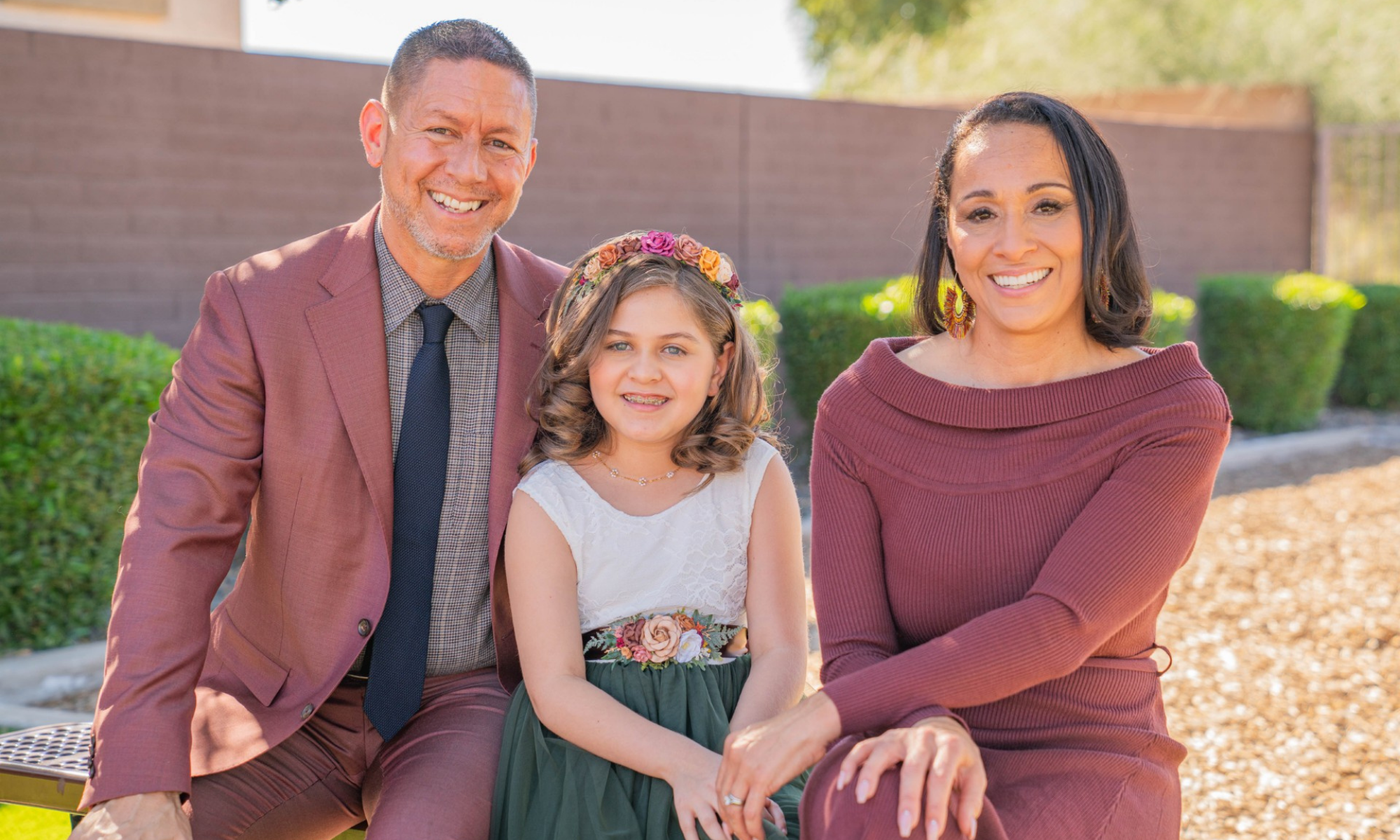
Motherhood was already a familiar journey for Flora Cook when her daughter Ella was born. She raised her son, Jordin, as a single mother before later meeting her husband, William. Ella was planned, anticipated and cherished — a gift to Flora and William at 40 and 42.
After a healthy pregnancy, they enjoyed all the early milestones of her first year. However, around her first birthday, there were noticeable changes – limited eye contact and a shrinking vocabulary – that prompted concern at her one-year checkup. Developmental screenings and evaluations eventually pointed to autism, a moment they now reflect on with gratitude.
Accessing formal evaluations was challenging, with long waitlists and insurance hurdles, but when an earlier appointment became available, they prioritized meeting with their developmental pediatrician, determined to support Ella in every way possible.
Their provider was experienced and direct. She believed Ella was on the autism spectrum.
“We didn’t understand what any of this meant,” says Flora. “A few months later, a second, more extensive evaluation with another provider confirmed the diagnosis of moderate to severe autism.”
Choosing Early Action
Their first referral was to SARRC’s JumpStart® program, a six-week parent empowerment course providing early support, coaching and guidance for families new to an autism diagnosis. Alongside this, Ella’s care plan included 40 hours of applied behavior analysis (ABA) therapy per week.
“Social and communication skills were the clearest gaps. Ella struggled to initiate interaction, avoided eye contact and had difficulty understanding social cues,” Flora says.
JumpStart gave Flora and William immediate tools to support her, and subsequent SARRC programs allowed them to actively participate in her therapy while Ella learned and played in a supportive, structured environment.
One of those programs was SARRC’s Community School. The small classroom environment allowed for the structured integration of ABA intervention, while giving Ella the opportunity to learn and play alongside her typically developing peers. Her therapists collaborated with speech and occupational therapists, aligning goals and creating consistency across settings. SARRC’s clinical support formed the backbone of their journey, but equally important was the sense of community they built.
At 4 years old, the SARRC team recommended transitioning Ella to a more comprehensive one-on-one, home-based program. SARRC’s AIM ABA™ program would provide the family with more individualized services in everyday settings such as home, school and the community, emphasizing collaboration with families and focusing on goals that are meaningful to daily life.
Within AIM ABA, Ella’s social and emotional development could remain the top priority — Flora’s main request.
“It became one of the best decisions we ever made,” Flora says.
Building Skills Where Life Happens
Within AIM ABA, Ella’s therapy focuses on measurable goals such as sustaining eye contact, initiating conversation and communicating more flexibly. Every environment became a classroom for connection.
Progress was gradual and the greatest milestone came just before her fifth birthday when Ella began gaining verbal communication.
Flora remembers the shift vividly. “She said ‘Mama.’ She said, ‘I love you.’ It brought my husband and me so much joy. Every word, everything she did, we celebrated.”
Through personal research and guidance from SARRC, the Cooks found a kindergarten program that met Ella’s needs. Friendships began to take shape, first with cousins and family in comfortable settings, then with classmates at school.
“She participated in a panel interview during a religious service. She sang an entire song at camp in front of a full audience without assistance,” Flora says. “Travel, once uncertain, has become part of her world. She has managed braces, doctor appointments, flights and family gatherings.”
A Story Still Being Written
Now 10, Ella’s social communication and confidence have continued to blossom. “Today, she navigates social situations with confidence that once felt unimaginable,” Flora says. Ella’s journey is not measured solely by milestones achieved, but by the full, evolving life she continues to build.
Surrounded by steady support, meaningful collaboration and a strong sense of community, Ella’s path forward reflects a family that met uncertainty with action and chose courage at every step. Flora reminds us: “This is not a story about limitation. It is a story about building connections, one skill at a time. And it is still being written.”